
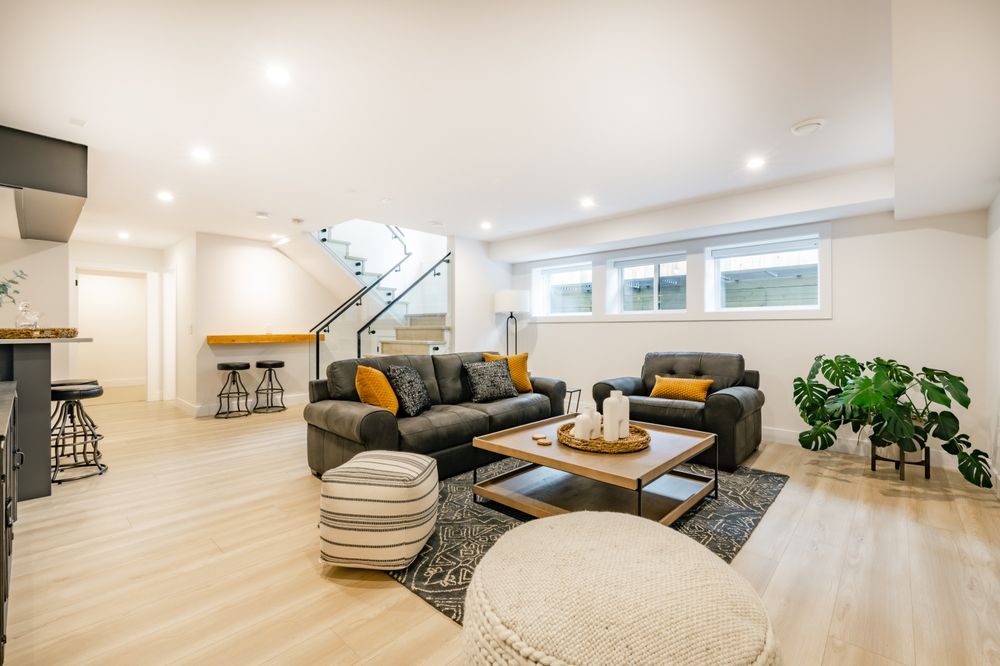
The Complete Basement Renovation Guide | The Dream, Costs, Timeline & What to Expect
A basement can be one of the most overlooked spaces in a home. For years, it may serve as little more than storage for holiday decorations, old furniture, tools and everything else that doesn’t quite have a place upstairs. But with the right planning, craftsmanship and design, that same space can become one of the most enjoyable – and valuable – parts of your home.
A finished basement can become a comfortable family room, a private guest suite, a home office, an entertainment space, a home theater or even a combination of several.
And while the finished space may look effortless, a successful basement renovation takes considerably more planning than simply putting up drywall and laying flooring.
The right approach considers what is happening behind the walls, beneath the floors and above the ceiling just as carefully as what you see when the project is complete.
That is where thoughtful planning and experienced craftsmanship make all the difference.
This Complete Basement Renovation Guide will walk you through the major considerations, from deciding what you want your basement to become to understanding the renovation process, timeline, investment and common challenges that can arise along the way.
Whether you are finishing an unfinished basement or transforming an outdated space entirely, the goal is the same: create a basement that feels like a natural part of your home – not an afterthought (or a dungeon).
Why Renovate Your Basement? | Turn Unused Space Into Something More
One of the greatest advantages of having a full basement renovation is that you are working with space you already have!
Instead of adding onto your home’s footprint, you can take an underused area and turn it into square footage your family can actually enjoy.
That could mean creating:
- A comfortable family room for movie nights and everyday living
- A dedicated home theater or entertainment space
- A guest bedroom or private guest suite
- A home office
- A children’s playroom
- A home gym
- A hobby or creative space
- A custom bar or entertaining area
- A combination of several living spaces
The possibilities are largely determined by your home, your needs and your imagination.
A well-designed basement renovation can also make your home feel larger without requiring you to leave the neighborhood you love.
For growing Georgia families, that can be especially valuable. Maybe the upstairs bedrooms are spoken for. Maybe you need somewhere for visiting family to stay. Or perhaps your children have reached the age where everyone could use a little more room to spread out.
Sometimes the best way to get more from your home isn’t to move.
It’s to make better use of the home you already have.
Types of Basement Renovations | What Could Your Space Become?
Before thinking about finishes, flooring or paint colors, start with the bigger question:
What do you want your basement to do for you?
The answer will influence nearly every decision that follows.
Family Living Space
A basement family room can provide a dedicated place to relax, play games, watch television or spend time together without competing for space upstairs.
Thoughtful lighting, comfortable flooring, built-in storage and a well-planned layout can make the space feel every bit as intentional as the main living areas of your home.
Home Theater & Entertainment
If your family loves movies, sports or entertaining, the basement can be a desirable location in your home for a dedicated media room for sound, lighting, and seating purposes.
Sound control, lighting, screen placement, seating and electrical planning should all be considered early.
The result can be much more than a television mounted on a basement wall. With the right design, you can create an immersive entertainment space designed specifically around how your family enjoys it.
Guest Suite
A basement can also provide valuable privacy for overnight guests or extended family.
Depending on the layout and applicable requirements, this could include a bedroom, bathroom, living area and storage – creating a space that feels more like a private retreat than a spare room.
Home Office
As the way we work continues to evolve, having a quiet place to focus has become increasingly valuable.
A basement office can provide separation from the activity of the main floor while giving you the opportunity to build a workspace around your specific needs.
Multi-Purpose Space
Not every basement needs to have one single purpose. A well-designed basement might combine a family room, home office, guest space and entertainment area without feeling crowded.
This is where thoughtful space planning becomes particularly important.
The objective isn’t simply to fit more into the basement.
It’s to make every square foot work.
Planning a Basement Renovation | Start With the Space You Have
Every successful renovation begins with understanding the existing home. A basement isn’t a blank canvas. Before design decisions are made, the existing conditions need to be evaluated.
That includes looking at:
- Moisture and water intrusion
- Foundation and structural conditions
- Ceiling height
- Existing plumbing
- Electrical systems
- HVAC and ventilation
- Windows and natural light
- Existing walls and flooring
- Access points and stairways
- Potential layout limitations
This step is particularly important in basements because some of the most important elements of the renovation will eventually be hidden.
You don’t want to discover a moisture problem after the new flooring has been installed.
You don’t want to finish the ceiling only to realize additional electrical or HVAC work is required.
And you don’t want to design a beautiful bathroom without first determining how the plumbing will get there.
Good planning means addressing those questions before construction begins.
Basement Renovation Costs | Customization Makes Every Project Different
One of the first questions homeowners naturally have when considering a basement renovation is:
“How much is this going to cost?”
The honest answer is that it depends on what you’re creating.
A basement renovation can be a straightforward refresh of an existing finished space, or it can involve a complete transformation with custom cabinetry, a bathroom, entertainment areas, specialty lighting, built-ins and carefully selected finishes.
The investment is shaped by the size and condition of the space, the scope of construction, the materials selected and the level of customization.
That’s why a meaningful renovation conversation should begin with how you want the space to function and feel, rather than trying to force every project into a generic price range.
Where Your Investment Goes
There are many factors that can influence the overall investment in a basement renovation, like:
- Existing conditions: A clean, dry basement ready for finishing has different requirements from one that needs moisture remediation, structural work or updates to existing systems.
- Layout: Adding walls, bedrooms, bathrooms or specialty spaces increases the complexity of the project.
- Materials: Flooring, cabinetry, tile, fixtures, lighting and hardware all come in different levels of quality and customization.
- Craftsmanship: Custom built-ins, cabinetry and detailed millwork require additional craftsmanship, but they can also be what transforms an ordinary basement into a truly personalized space.
- Specialty features: Home theaters, custom bars, fireplaces, wine storage, fitness areas and sophisticated lighting plans can all affect the scope.
The question isn’t simply “How much does a basement cost?”
It’s “Where do I want my investment to make the greatest difference?”
Luxury Doesn’t Have to Mean Out of Reach | Thoughtful Design, Exceptional Craftsmanship
Luxury renovation has traditionally carried the idea that beautiful, highly customized spaces are reserved for a very small group of homeowners. Summit Renovations sees it differently. Luxury isn’t simply about choosing the most expensive material available.
It’s about thoughtful design, exceptional craftsmanship, attention to detail and creating a finished space that feels distinctly yours.
That might mean a beautifully designed entertainment room with custom built-ins.
It might mean a guest suite that feels like a private retreat.
It might mean investing in one exceptional architectural feature that becomes the focal point of the room while making thoughtful decisions elsewhere.
This is where Summit Renovations works to bridge the gap between high-end craftsmanship and approachable luxury.
The goal isn’t to create a space that feels extravagant simply for the sake of being extravagant.
It’s to create a home that feels elevated, intentional and beautifully finished – while making thoughtful choices about where the investment matters most.
For Georgia families, luxury can be personal.
It can be practical.
And it can still feel like home.
The Complete Basement Renovation Timeline | From Planning to Finished Space
There is no universal timeline for a basement renovation because every project is different. A straightforward finishing project will naturally move differently from a basement requiring structural changes, plumbing, custom cabinetry or specialty rooms.
However, most projects follow a similar sequence.
1. Consultation & Assessment
The process begins with understanding your home and your vision. This is where the existing basement is evaluated, your goals are discussed, and potential challenges are identified. The more information gathered at this stage, the better the project can be planned.
2. Design & Planning
Once the goals are established, the space can be designed around them.
This may include floor plans, layouts, material selections, lighting, cabinetry and other design details. At Summit Renovations, the design process is about more than making the basement look good. It’s about making sure the space works.
3. Proposal & Project Preparation
Once the design and scope are established, the project can be finalized and prepared for construction. Materials, schedules, trades and other project details need to be coordinated before work begins. This preparation may not be the most exciting part of the renovation, but it is one of the most important.
4. Demolition & Preparation
If the existing basement is being renovated, demolition comes first. Old flooring, walls, cabinetry, fixtures and other elements may be removed to prepare the space. This is also when previously hidden conditions may become visible.
5. Structural & Mechanical Work
Depending on the project, this phase can include framing, electrical, plumbing, HVAC, insulation, and other behind-the-walls work. These systems need to be completed correctly before the walls are closed.
6. Drywall, Flooring & Finishes
Once the major systems are in place, the basement begins to look like the space you envisioned. Drywall, flooring, tile, cabinetry, paint and other finishes are installed.
7. Fixtures & Final Details
Lighting, plumbing fixtures, hardware, doors, trim and other details bring the project together.
This is where the difference between simply finished and finished well becomes apparent.
8. Final Walkthrough & Completion
Before the project is considered complete, the space should be carefully reviewed. At Summit Renovations, attention to detail doesn’t stop when the major construction is finished. The final result should meet the same standard as every other part of the project.
What Can Delay a Basement Renovation? | The Things Behind the Walls Matter
Renovations rarely go exactly according to a calendar hanging on the wall. The goal isn’t to pretend unexpected issues never happen. The goal is to plan well enough that they can be managed properly when they do. Common challenges can include:
Moisture
Water intrusion is one of the most important issues to address before finishing a basement.
Any signs of moisture, leaks or dampness should be investigated before cosmetic work begins.
Existing Electrical or Plumbing
Older homes may have systems that require updating to support the new space.
Moving plumbing or adding bathrooms can also increase the complexity of the project.
Structural Conditions
Removing walls or changing the layout can uncover structural considerations that weren’t obvious during the initial walkthrough.
Material Lead Times
Custom cabinetry, specialty tile and unique finishes may require additional ordering time.
Making selections early can help prevent unnecessary delays.
Design Changes
Changing your mind halfway through construction can affect both schedule and investment.
That doesn’t mean changes can never happen. It means they should be carefully considered and communicated before work proceeds.
Choosing Materials for Your Basement | Beautiful Should Also Be Built to Last
A basement environment has different considerations than an upstairs living space.
Moisture, humidity, traffic and the intended use of the room should all influence material selection.
Flooring
Choose flooring based on both appearance and performance.
Luxury vinyl, tile and other moisture-resistant options can provide durability while still allowing you to create a beautiful finished design.
Cabinetry
If your basement includes a bar, entertainment center, storage area or built-in workspace, cabinetry can dramatically improve both appearance and functionality.
Custom cabinetry can also help make use of awkward corners and spaces that standard furniture cannot.
Lighting
Basements often have less natural light than upper floors, making lighting particularly important.
A thoughtful lighting plan can include new electrical with stunning ambient lighting and accent lighting to make the room feel bright, comfortable and intentional.
Tile & Finishes
Tile can introduce texture, personality and visual interest – particularly in bathrooms, bars and feature areas.
The right materials should complement the overall design while standing up to the demands of everyday life.
How to Prepare Your Home During a Basement Renovation | Protecting Your Everyday Routine
One of the biggest concerns homeowners have about renovations isn’t necessarily the finished product. It’s living through the process. Construction can create noise, dust, traffic and temporary changes to how you use your home.
That is why jobsite organization matters.
A professional renovation team should have a clear plan for protecting the areas of your home that aren’t being renovated, maintaining a clean work environment and minimizing disruption wherever possible.
Summit Renovations approach is rooted in the idea that your home should still feel like your home throughout the renovation.
That means respecting the property, communicating clearly and maintaining a clean and orderly worksite. For homeowners, it is also helpful to think ahead about how the renovation will affect daily routines. If the basement contains your laundry room, storage, bathroom or another frequently used area, determine how you’ll manage while that space is temporarily unavailable. A little preparation can make the experience considerably easier.
Basement Storage & Space Optimization | Make Every Square Foot Count
A beautiful basement isn’t particularly useful if there is nowhere to put anything.
Storage should be part of the design from the beginning – not something added after the renovation is finished.
Consider:
- Built-in cabinetry
- Under-stair storage
- Custom shelving
- Hidden storage
- Dedicated utility storage
- Mudroom-style organization
- Built-in entertainment storage
Custom solutions can be particularly valuable because they allow storage to work with the architecture of the room rather than forcing the room to work around standard furniture. The best storage is often the storage you barely notice.
Common Basement Renovation Mistakes | What Homeowners Should Avoid
Finishing Before Addressing Moisture
Never cover up an underlying moisture problem simply because you are eager to get started.
Address the cause first.
Designing Around Appearance Alone
A beautiful basement still needs to function for the people using it.
Consider traffic flow, storage, lighting, furniture placement and how the space may evolve over time.
Choosing Materials Based Only on Price
The cheapest material isn’t always the best value.
Durability, maintenance, appearance and longevity should all be part of the decision.
Leaving Decisions Until Construction Begins
Last-minute material selections can create delays and unnecessary stress.
Making decisions early allows the project to move more efficiently.
Trying to Do Everything at Once
A basement has enormous potential, but that doesn’t mean every idea needs to be included, but you can prioritize the features you truly want to highlight that will have the greatest impact on your family’s day-to-day life.
Bring Your Basement Vision to Life | Built With Purpose, Finished With Pride
Your basement doesn’t have to remain the forgotten floor of your home. With thoughtful planning, quality materials and exceptional craftsmanship, it can become one of the spaces your family enjoys most. At Summit Renovations, the philosophy is simple: excellence is not a value; it is a necessity.
That means paying attention to the details others might overlook. It means treating your home with respect. It means maintaining a clean and organized work environment. And it means taking the time to understand what you want your space to become before picking up a hammer.
From the first conversation through the final walkthrough, the goal is to make the renovation experience feel as considered as the finished space itself. Because your home deserves more than a basement that is simply finished.
It deserves a space that was designed for you, built with care and finished to a standard you’re proud to bring your family into.
If you’re considering a basement renovation in the Atlanta area, Summit Renovations can help you take the first step! Connect with us today!
Frequently Asked Questions | Basement Renovations
How much does a basement renovation cost?
There isn’t one standard cost for a basement renovation. The investment depends on the existing condition of the space, size, layout, structural requirements, materials, finishes and level of customization.
A custom basement designed around your family’s needs will naturally have different requirements than a straightforward finishing project.
How long does a basement renovation take?
The timeline depends on the overall scope of the home renovation project. A simpler renovation may move relatively quickly, while a more extensive transformation involving bathrooms, structural changes, custom cabinetry or specialty spaces can take considerably longer. A detailed project plan should establish realistic expectations before construction begins.
Do I need permits for a basement renovation?
Permit requirements can also depend on the scope of work and local jurisdiction. Structural changes, electrical work, plumbing and other modifications may require permits and inspections.
Your contractor should help identify the applicable requirements for your project.
Can I build a legal secondary suite?
Potentially, depending on your home’s location, zoning, layout and applicable building requirements. Secondary suites have specific requirements that can involve things such as egress, fire separation, ceiling height, plumbing, electrical and other safety considerations.
If a secondary suite is part of your vision, it should be discussed during the planning phase – not after construction has already begun.
What adds the most value in a basement renovation?
The most valuable improvements are generally those that make the space genuinely useful and well integrated into the home. Functional living areas, additional bathrooms, guest accommodations, quality finishes, thoughtful storage and well-executed design can all contribute to the value of a finished basement.
Can I live in my home during the renovation?
In many cases, yes. The answer depends on the scope and location of the work. A basement renovation can often be completed while the homeowners continue living upstairs, although there will still be some noise, dust and temporary disruption. A good contractor should communicate what to expect and take steps to keep the worksite organized and your living areas protected.



Leave a Reply
Want to join the discussion?Feel free to contribute!